

BANKING AND FINANCE | PRACTICAL GUIDE
Cochabamba, November 2026
On November 16, 2026, Supreme Decree No. 5776 was issued, setting new maximum interest rates for credit to the productive sector, based on the size of the productive unit. It is one of nine regulations approved that day and, for the business sector, probably the one with the greatest immediate impact.
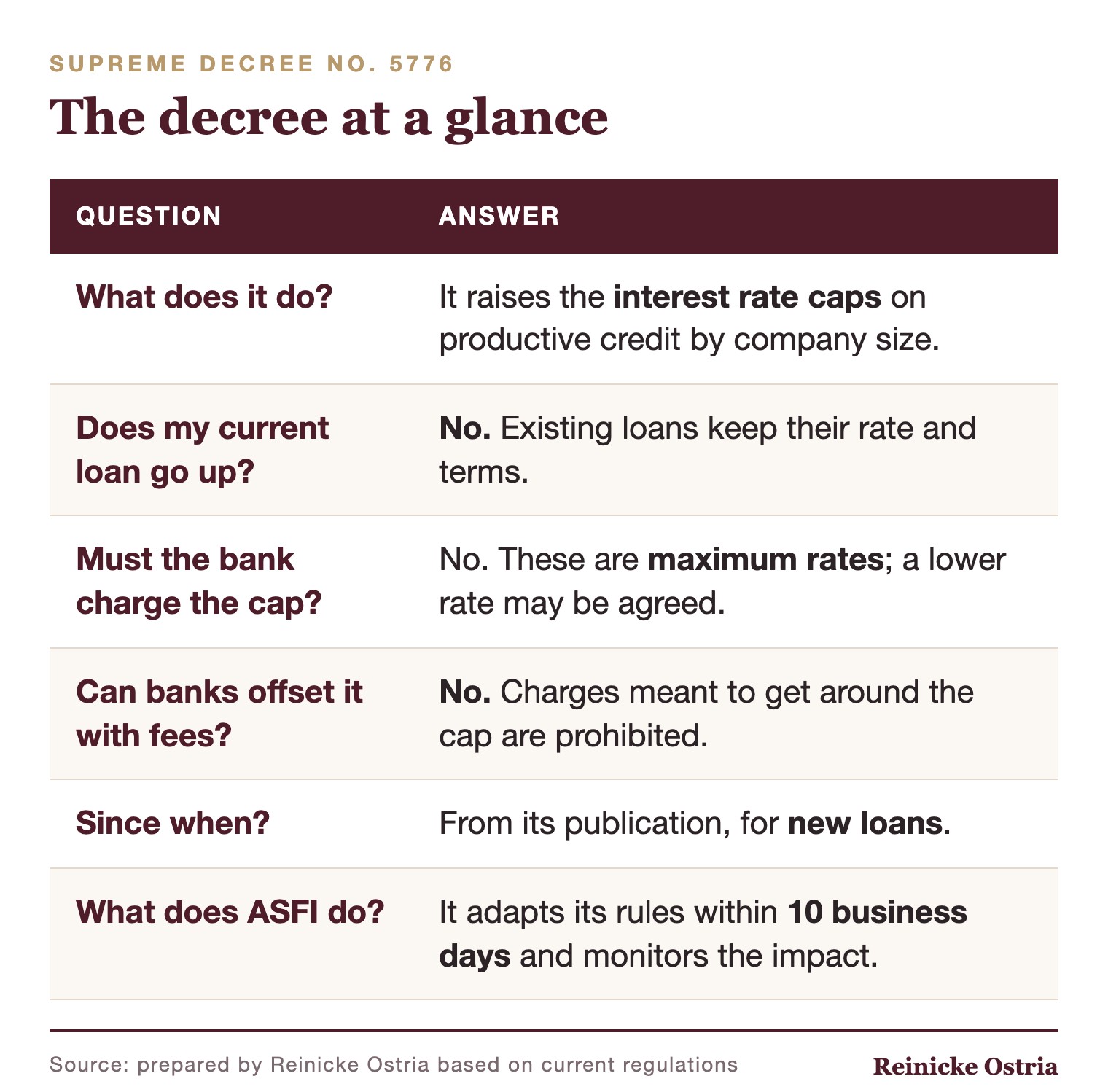
In simple terms: banks may charge more for new productive loans, up to a new cap. The loans you already have do not change.
1. The decree at a glance
2. The new maximum rates
Supreme Decree 5776 amends paragraph I of article 5 of Supreme Decree No. 2055 of July 9, 2014, which had already been amended by Supreme Decree No. 5403 of May 23, 2025.
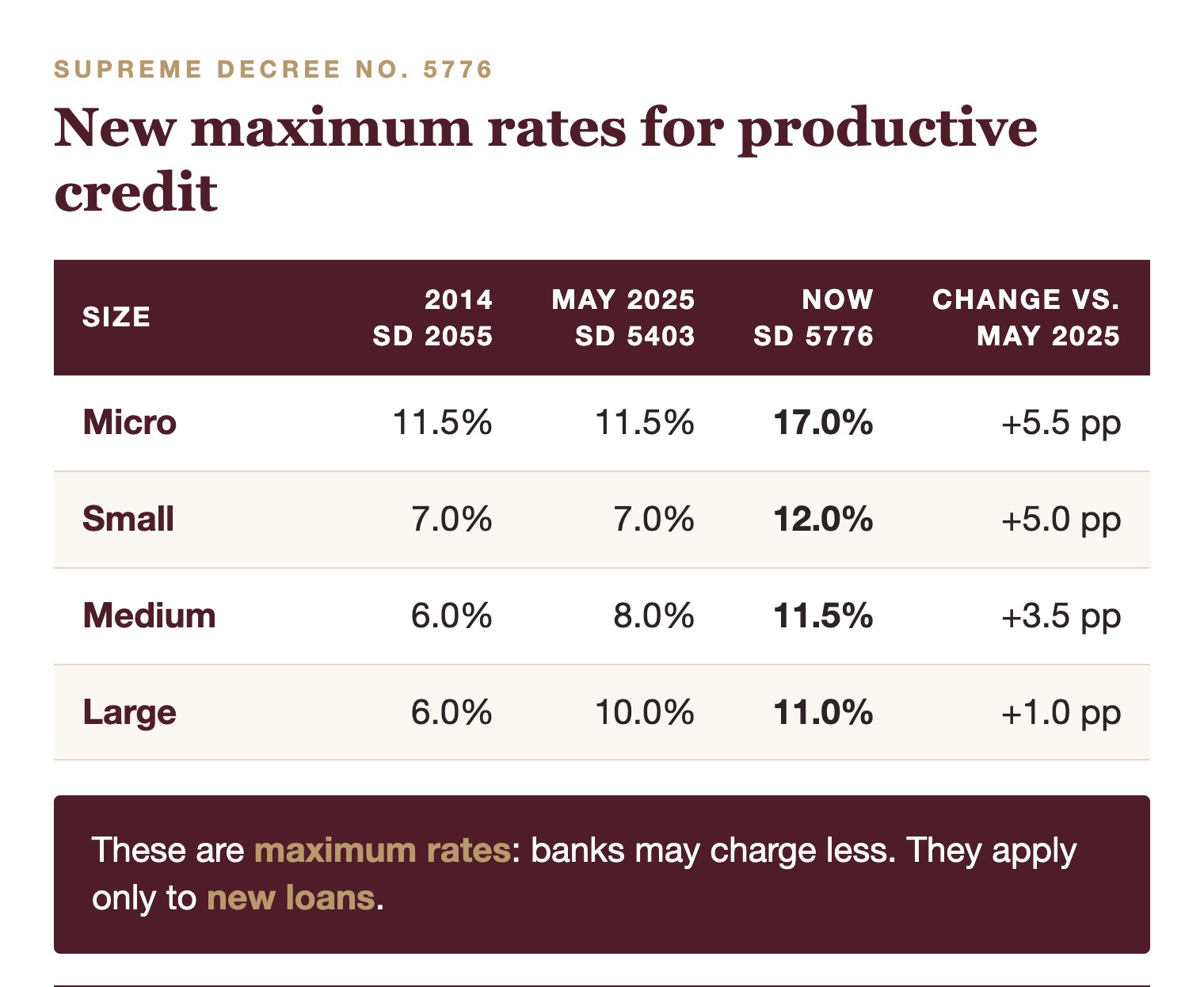
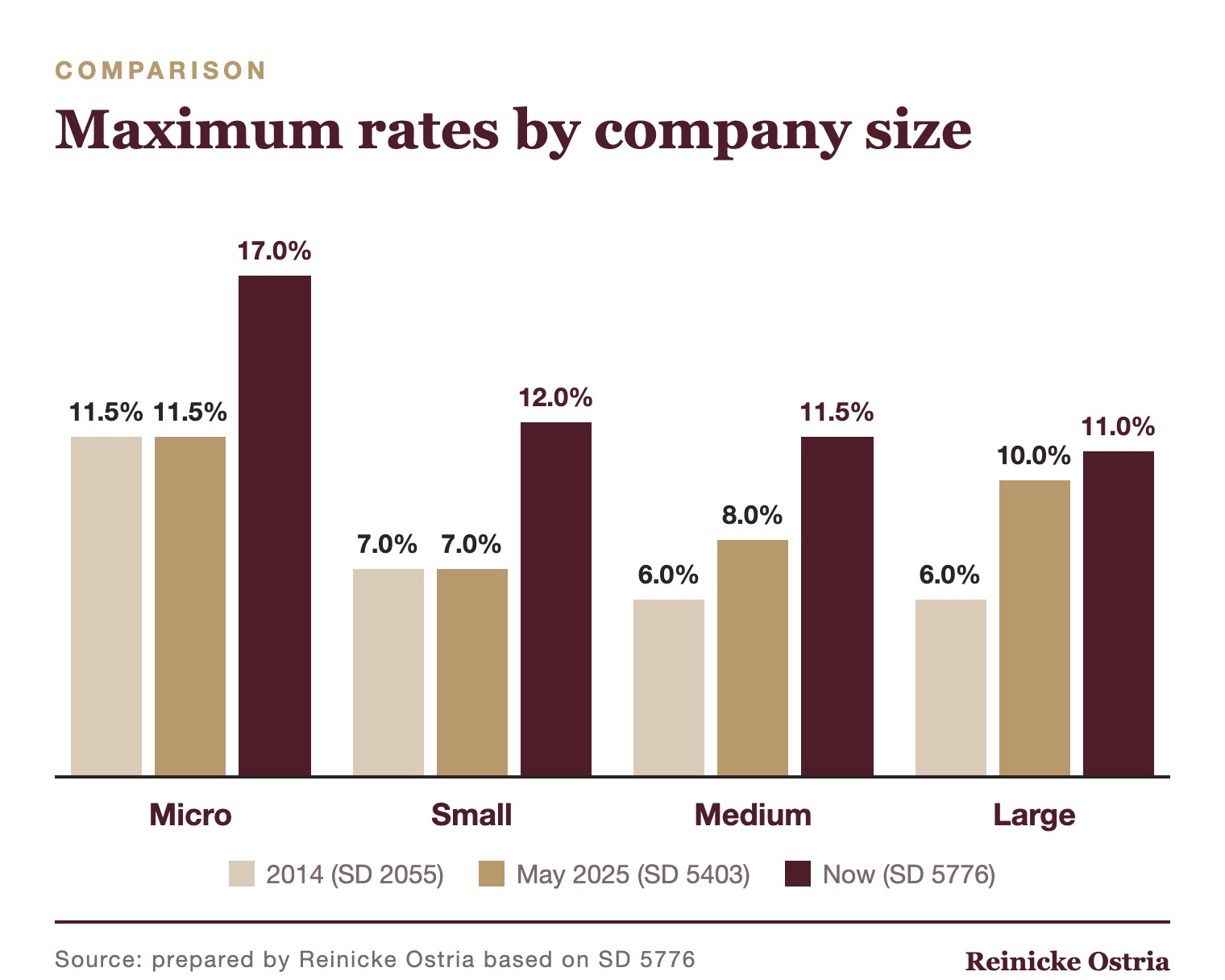
The largest increase is for micro and small businesses. For large companies, the cap rises by only one point compared with the rule in force since May 2025.
3. What does the decree say?
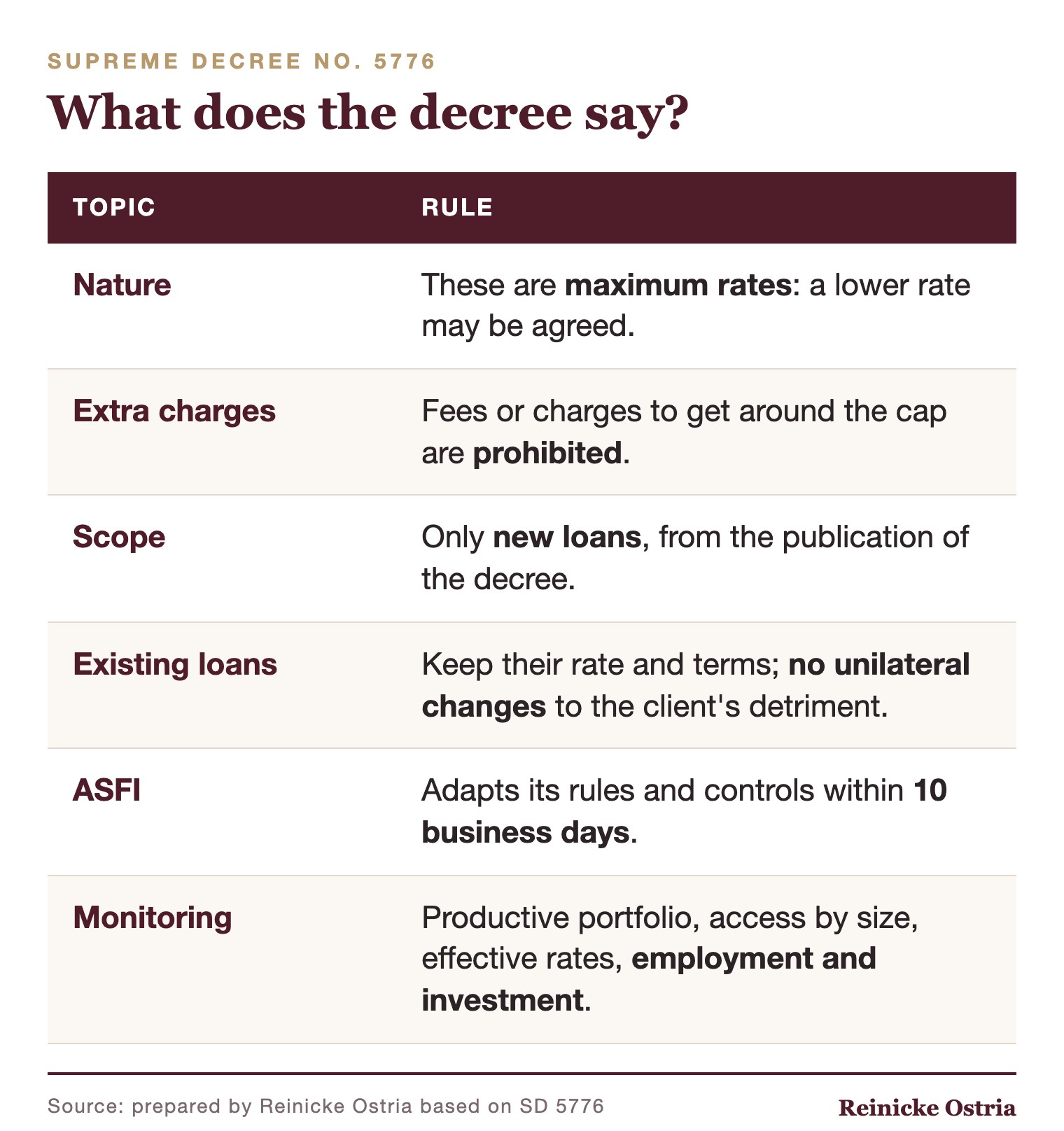
• These are maximum rates. Financial institutions may agree lower rates; the decree does not require them to charge the cap.
• Charges to get around the cap are prohibited. Fees or other charges whose purpose is to indirectly exceed the maximum rate are not allowed.
• Only for new loans. The new caps apply to loans granted from the publication of the decree.
• Existing loans stay the same. They keep their rate and terms, and cannot be unilaterally modified to the borrower's detriment.
• ASFI must adapt its regulations and control mechanisms within up to 10 business days.
• ASFI monitoring. The Financial System Supervisory Authority will monitor the productive loan portfolio, access to credit by company size, effective rates and the impact on employment and investment.
4. Why are rates going up?
According to the Economic Observatory of the Chamber of Industry, Commerce and Services of Cochabamba (ICAM), deposits in the financial system grew 13.3% in one year, while the loan portfolio grew only 3.35%, a gap of nearly 8 points.
With a low ceiling on productive credit, banks found it more attractive to place their money in liquid instruments than to lend. Raising the ceiling aims to make lending to the productive sector profitable again, so that credit grows in line with deposits.
5. Who is affected?
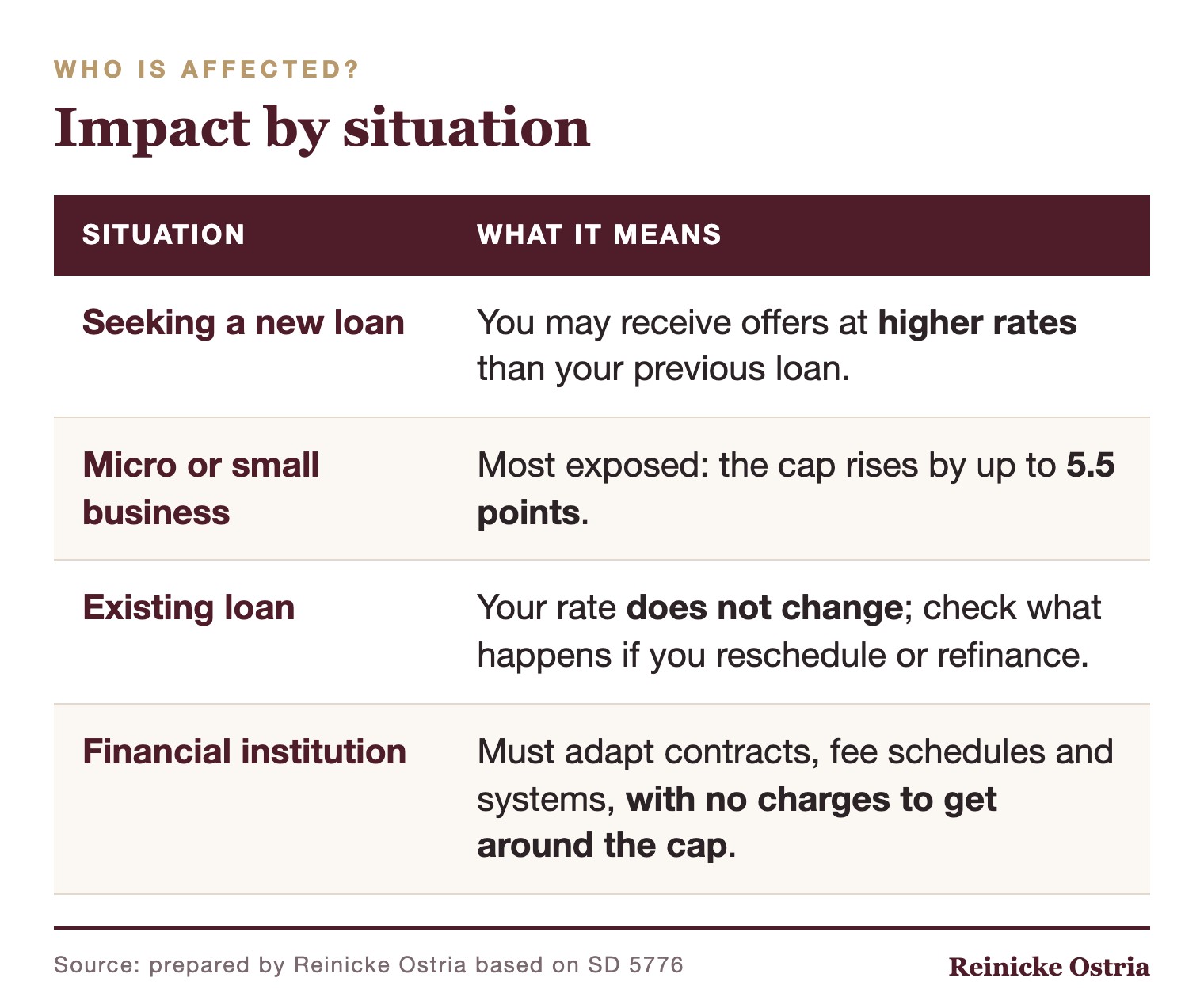
• Companies seeking a new loan or a renewal: they may receive offers at higher rates than their previous loan.
• Micro and small businesses: they are the most exposed, with an increase of up to 5.5 points in the cap.
• Companies with existing loans: their rate does not change, but it is worth checking what happens if they reschedule, refinance or request an additional disbursement.
• Financial institutions: they must adapt their contracts, fee schedules and systems, and comply with the ban on charges designed to get around the cap.
6. Risks and points to watch
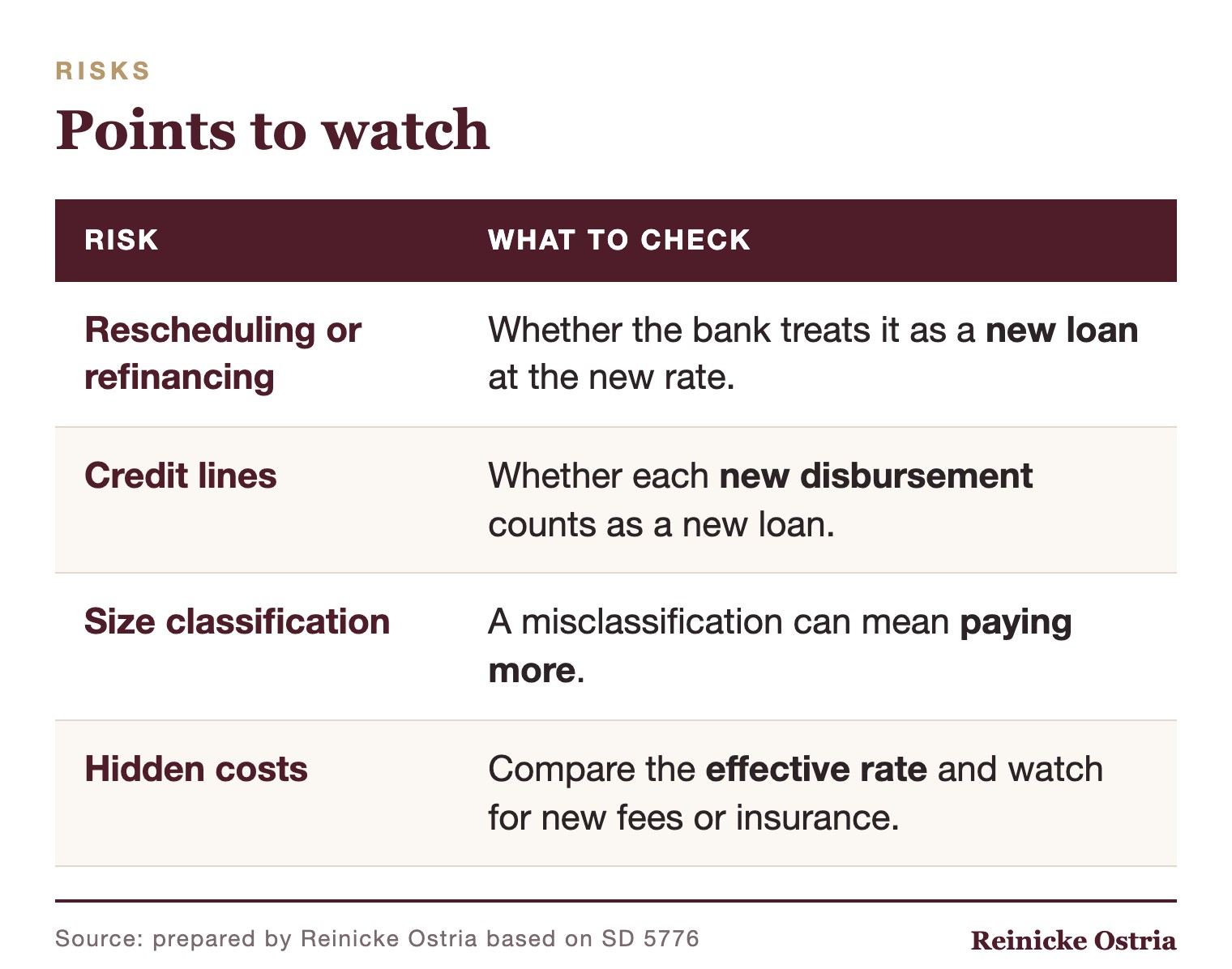
• Rescheduling and refinancing: check whether the institution treats them as a new loan subject to the new rate, or as part of the original loan.
• Credit lines: under an approved credit line, each new disbursement could be treated as a new loan. Review what your contract says.
• Size classification: the rate depends on whether your company is micro, small, medium or large. A misclassification could mean paying more.
• Hidden costs: compare the effective rate, not just the nominal one, and watch for new fees or insurance that may disguise an increase.
7. Checklist: what to do now

8. Frequently asked questions
Does the rate on my current loan go up?
No. Existing loans keep their rate and terms, and cannot be unilaterally modified to your detriment.
Does the bank have to charge me the maximum rate?
No. These are caps; the institution may offer a lower rate.
Can banks offset it with fees?
The decree prohibits charges whose purpose is to get around the limits.
When does it take effect?
From its publication, for new loans. ASFI has up to 10 business days to adapt its regulations.
At Reinicke Ostria we support companies in reviewing and negotiating their loan agreements and in their dealings with financial institutions. For a consultation, contact us through our contact page.
This document is for information purposes only and does not constitute legal advice. Each case must be assessed individually.
Reinicke Ostria — Vision beyond. Precision always.